


Where did that player go?
Where did that player go?
March 24, 2026
The 2026 Sweet 16 is made up entirely of programs from power conferences. It’s only the second time it’s happened in the history of the NCAA Tournament. No mid-majors. That hasn’t happened since -- last season.
The NCAA Tournament. The portal. Name, image and likeness. There have been many changes in recent years. Most were predictable. They may not be universally embraced, but we all understand it’s about the money. The one aspect I just cannot wrap my head around is the reluctance, apprehension or flat-out refusal to play postseason basketball.
In today's evolving college basketball landscape, a noticeable trend has emerged. Players and even entire teams are opting out of postseason tournaments unless it's the NCAA Tournament. The prestige of March Madness has turned the third month of the year into month-long holiday, but other tournaments haven’t been part of the celebration lately.
The National Invitation Tournament (NIT), the CollegeInsider.com Postseason Tournament (CIT), CBI and the new College Basketball Crown and BCIC Invitational have seen declining participation and enthusiasm. The CIT and CBI no longer exist, and the Crown and BCIC face their own challenges.
What happened? How did we get a place where “basketball players” are more inclined to sit this one out?
We aren’t that far removed from a time when kids would get knocked out of the conference tournaments and couldn’t wait for another opportunity to play ball the following week. Most kids were looking for another game that same day.
In 2016 there were 351 division I basketball programs and 156 of them participated in the NCAA Tournament (68), NIT (32), CIT (32), CBI (16) and Vegas Tournament (8). There were also another 20-25 teams that didn’t receive an invitation. Over half the teams in the country played in the postseason or wanted to keep playing in March.
In 2026 only 108 teams put on their uniforms in March. In 10 years, we went from 44% of all teams to just 30% that got their ankles taped in the postseason.
In one decade, we have forgotten why we play this game. We can no longer relate to that 10-year-old kid who couldn’t wait to wake up in the morning and get down to the park. All that kid thought about was ball. And when that kid lost, he was pissed off and couldn’t wait to get another game.
What happened to that kid?
The era of NIL has obviously changed the game forever. Players are making business decisions. For the majority, the season effectively ends once NCAA Tournament hopes are gone. Players begin preparing for professional careers or exploring new programs rather than risking injury in additional games.
The risk isn’t worth the reward. That’s the new mentality for so many players. If they get hurt, they can’t get paid. Where does that stop? Will intense early-morning practices start being viewed like postseason events not called the NCAA Tournament? Are we eventually going to turn practice into nothing more than walkthroughs and film study because somebody might get hurt?
My generation grew up playing basketball until we were eliminated from whatever tournament we were playing in. We didn’t spend a lot of time thinking about how an injury could affect our scholarship. The first time we scraped a knee or turned an ankle as a kid, we understood injuries were just part of the game.
I’m sure I would have approached things differently, had NIL and the portal been part of college basketball in the 1990s. Maybe I would have had a better diet or a more accelerated off-season workout program, but I can’t accept that I would have lost my competitive edge.
Competition makes the product better. More basketball = more development. Games matter. Extra reps in high-pressure situations help players grow. Younger players gain experience, and veterans sharpen their skills. Tournaments -- not called the NCAA Tournament -- are still real, competitive environments, not exhibitions.
I remember one coach sharing with me that his team was sluggish in their first game of the CIT. There was a little hangover. Players are human. They are disappointed that they weren’t in the NCAA Tournament and got off to a slow start. They got better as the game progressed and went on to get a victory. Once they got a win under their belt, it didn’t matter what tournament they were playing in. They wanted to win and they did go on to win the CIT that year.
If you go back over the past 25-30 years, you will find similar stories in every postseason tournament, not called the NCAA Tournament.
While not as massive as the “Big Dance,” events like the NIT still receive national coverage. Strong performances can boost a player's visibility, especially for those under the radar. Players can raise their value, or they can create a market that didn’t previously exist.
In the last couple of seasons there were more than just a few players who got the opportunity to get more playing time in the NIT or the Crown event. Some teammates “opted out” and reserve players made the most of their opportunities. It was a showcase.
I’m sure if you asked those players they would tell you that they were excited -- for the opportunity to play and improve their situation -- and to compete for a championship. You can accomplish both. Winning in March builds character, confidence, pride, tradition and culture. It sends a message -- We compete, no matter what the stage.
Just a few short years ago, we traveled to Tuscaloosa, Alabama to face the Crimson Tide in the first round of the 2019 NIT. We beat the Tide, 80-79 in overtime. That wasn't just a win -- It was a statement. At the time it was the largest point spread upset in the NIT (under the current format). Competing against a high-major opponent, we showcased our toughness, talent, and pride.
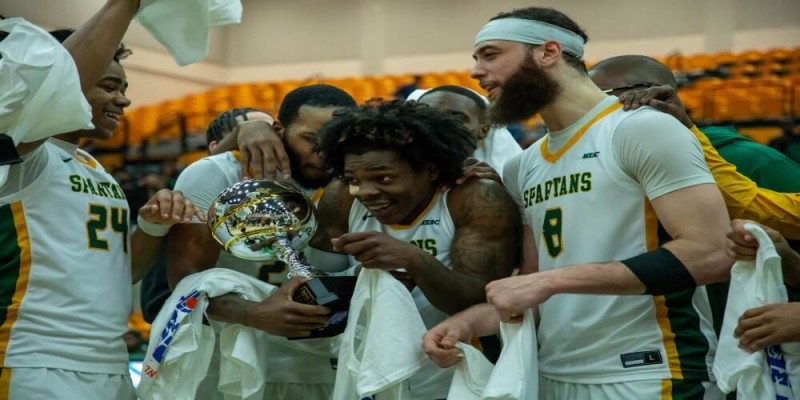
Fast forward to 2024, Norfolk State captured the final CIT championship, cementing their place in history as the last program to ever win that tournament, and the first HBCU to ever win a division I national postseason basketball tournament.
These weren't "secondary" moments. They were defining moments. These are moments you can sell to your alumni and boosters to get behind and support the program more.
For players, coaches, and fans, those runs represent some of the best memories in Norfolk State basketball history. The joy of winning. The bond built that was built through extra games. The opportunity to represent the program, on a national level, created a lasting impact.
For those seniors in the CIT, it allowed them to return home with a championship. We had one senior who didn't play in the tournament because he deemed it "not important". Well, the CIT championship banner hangs boldly in the rafters of Echols Hall.
Our team was disappointed in 2019 and 2024, when we didn’t make the NCAA Tournament. We came so close but came up short. We didn’t start 2024 with an eye on playing in the CIT and we didn’t enter 2019 with designs on being a part of the NIT. The NCAA Tournament is always the goal.
Think back to when you were back in college. You saw that one girl on campus. Your goal that semester was to meet her, but she ended up getting an invitation to dinner from some other dude. Instead, you went on a blind date with your buddy and his girlfriend. You really didn’t know what to expect, but it ended up being a great date.
Now as coaches, are we going to just sit at home if we don’t get into the Big Dance or are we going to go on that blind date. I'm a basketball coach. That’s what I do. Anytime I can coach, I want to coach. I don't teach driver’s education. I coach basketball. If there is a tournament to be invited to, I WANT TO PLAY.
Just look at what’s going on in the Women’s game. The Women’s National Invitation Tournament (WNIT) has 48 teams. The Women’s Basketball Invitational (WBIT) has 32 teams. When you add in the 68 teams in the NCAA Tournament, there are 148 out 352 programs playing postseason basketball. The women want to keep playing.
Yes, the NIL component is not the same, but the portal is still very populated. Last season over 2,400 players transferred on the men’s side. The women’s game saw over 1,500 players transfer -- which was a record -- but the women kept playing. They have a mentality of “we came here to play basketball.”
Let's be honest, nothing compares to March Madness. The national spotlight. The upsets. History. Other tournaments -- fairly or unfairly -- are often viewed as consolation prizes rather than meaningful championships.
I’ve heard all the reasons for not playing in other events. It was a long season. The financial component. We can’t host. Too much travel. We’re banged up.
I understand every situation is different and some are unique. It’s not my place to lecture fellow coaches or other players, but I want kids in my program that want to play postseason basketball, regardless of the name of the tournament.
Choosing not to play may seem like a smart, short-term decision. But history -- especially at places like Norfolk State -- shows that saying yes to postseason opportunities can lead to moments that define careers.
At the end of the day, banners, wins, and memories don't come with an asterisk.
They last forever.