


The Tournament You Never Heard of
The Tournament You Never Heard of
March 30, 2026
The Final Four is set. With Arizona, UConn, Illinois and Michigan. It should be a great basketball weekend in Indianapolis.
Last season the men’s NCAA Basketball Tournament generated over 1 billion dollars, through media rights and sponsorship. 85% of the NCAA’s annual revenue comes from the Tournament. Those numbers will only continue to rise. The popularity of March Madness has never been greater.
It might be hard to believe, but there was a time when the “Big Dance,” looked more like a high school dance. There were no fancy courts, no bracket challenges and absolutely no buzz. The national media viewed the tournament more as curiosity piece. There was no NCAA Tournament selection show and most of the games were not televised. You had to check the morning newspaper to find out who was in the tournament and some of the top teams did not even participate. There was no March Madness. It was just March.
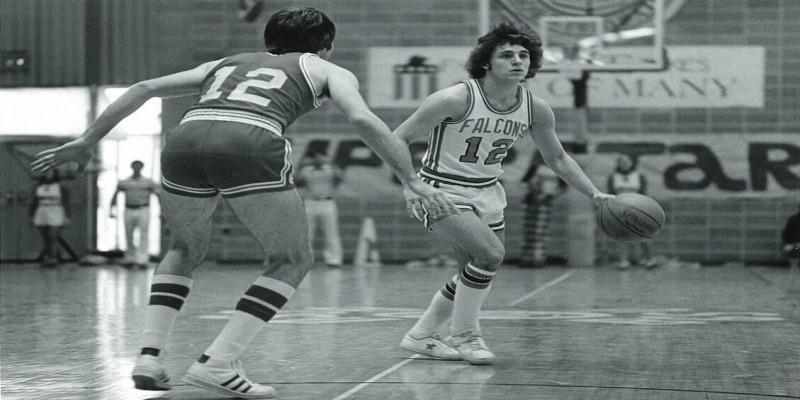
In 1974 I was a freshman at Bowling Green. Yes, I’m old. That 1974-75 team was really good. We felt like we had a shot to win the Mid-American Conference and make the NCAA Tournament. At that time there was no MAC Tournament. In fact, the ACC was the only league in America to have conference tournament. On the final day of the regular season we lost at home, 82-80 to Central Michigan. The Chippewas went to the NCAA Tournament, and we went to the National Commissioners Invitational Tournament.
If you have never heard of the NCIT, you aren’t alone. In the mid-1970s there were a lot of people that had no idea what it was either. Up until 1974, there were two postseason tournaments for division I college basketball. It was the NCAA Tournament and the National Invitational Tournament. That was it, but things were starting to change.
In 1974, the NCAA Tournament had just 25 teams and they only allowed conference champions to be part of the Tournament. If you finished second in your conference, you went to the NIT or you went on Spring Break.
The National Invitational Tournament should have been a haven for all the runner-up teams, but the NIT was more of an East Coast invitational event. There were a lot of good teams that were completely left out of the postseason party in the early 1970s. That finally changed in 1974.
The obvious move was to expand the NCAA Tournament field. There hadn’t been expansion since 1968, when the field went from 23 to 25 teams. Adding more teams would have been the easy route, but instead the NCAA and conference commissioners got together and created a new tournament, which would focus on second-place teams. The 8-team tournament would be played at a neutral site, and included teams from the Big 8, Big Ten, MAC, Missouri Valley, Pac-8, SEC and WAC.
It was originally called the Collegiate Commissioners Association Tournament. The first field for the CCAT featured Arizona State (18-9), Bradley (20-8), Indiana (23-5), Kansas State (19-8), SMU (15-12), Tennessee (17-9), Toledo (19-9), and USC (24-5). All games were played in St. Louis, Missouri.
Bobby Knight’s Indiana squad won that inaugural tournament. The Hoosiers defeated Tennessee 73-71, and Toledo 73-72 to reach the final where they beat USC 85-60. The tournament gave Indiana freshman Kent Benson an opportunity to get some additional playing time, and he would earn Tournament MVP honors.
The tournament also helped to propel Indiana the following season. The Hoosiers didn’t lose a single game until the Elite 8 of the NCAA Tournament, when they fell to Kentucky. They finished 31-1. If Scott May had not broken his arm, many believe Indiana would have won cut down the nets that season. The next season, they won the National Championship finishing 32-0. The 1976 Indiana Hoosiers are still the last team to have a perfect season.
The 1974 CCAT may have helped Indiana, but Coach Knight certainly didn’t help the future of the event. He did not want to play in the tournament. He said publicly that he “preferred to play in the NIT,” but Indiana was compelled to participate because they finished 2nd in the Big Ten.
He was also critical of the officiating, referring to the referees as “consolation” officials. He believed the tournament was created to “run the NIT out of business," which he opposed. The NIT helped launch Coach Knight’s career. He coached six seasons at West Point and led the Army Black Knights to four NIT appearances and went to the NIT in his first season at Indiana.
Knight had an affinity for college basketball’s oldest postseason tournament and he was right -- the NCAA wanted to see the NIT to go away. The creation of the Collegiate Commissioners Association Tournament was the first step towards that goal. Even before the ’74 CCAT began, the wheels were already in motion for expansion. The NCAA Tournament didn’t have all the best teams and that had to change.
The 1974 ACC Championship was one of the greatest college basketball games ever played. Led by the great David Thompson, North Carolina State was 24-1 and ranked No. 1 in the Associated Press Top 25. The Wolfpack’s lone loss came early in the year to defending National Champion UCLA. After a win over Virginia, NC State faced Maryland in the ACC Final. The Terps were 23-4 and ranked No. 4 in the AP. They were loaded, led by John Lucas, Tom McMillen and Lenny Elmore. They beat Duke and North Carolina to reach the Final.
The highly anticipated matchup lived up to all the hype, as NC State prevailed 103-100, in overtime. Two weeks later they defeated Marquette to win the National Championship. Maryland, which was the second-best team in the country, did not go to the NCAA Tournament and declined an invitation to play in the NIT.
A few months after the end of the season, the NCAA voted to expand the field from 25 to 32 teams for the 1974-75 season.
THE LAST CHAMPION
Indiana’s tremendous regular season in 1975, on the heels of winning the inaugural tournament, gave the upstart postseason event a little bit of juice. We were disappointed to lose the final game of the regular season to Central Michigan, but finishing 2nd, we knew we were headed to the National Commissioners Invitational Tournament.
As college kids, it was a big deal for us to be able to participate in the second year of the tournament. We felt like we were part of something special. I’m sure we didn’t realize the ramifications of the NCAA Tournament expanding or how it may have affected the NIT. All we cared about was that we were playing in the postseason.
At the time, it was Bowling Green’s 11th postseason appearance, and the first since qualifying for the 1968 NCAA Tournament. BGSU had great basketball tradition. The Falcons had made four trips to the NCAA tourney and six to the NIT.
The tournament field was strong. It included Arizona (19-7), Bowling Green (18-10), Drake (19-10), East Carolina (19-9), Missouri (18-9), Purdue (17-11), Tennessee (18-8), and USC (18-8). The venue moved from St. Louis to Louisville, Kentucky.
We were getting a chance to play at Freedom Hall, home of the Louisville Cardinals. Denny Crum had just taken the Cardinals to the Final Four three years earlier and that 1975 team went back to the Final Four. For a kid from Defiance, Ohio, playing on Louisville’s home floor was cool as hell.
We opened against Tennessee, which had one of the top duos in college basketball. They called it the “Ernie and Bernie Show.” During their three years together in Knoxville, Ernie Grunfeld and Bernard King combined to average over 50 points per game. They were basketball royalty. Grunfeld would win a Gold medal with Team USA at the 1976 Olympics and was a consensus second team All-American in 1977. King, who was just a freshman on the team we faced, was a three-time SEC Player of the Year and went on to have a Hall of Fame career with the New York Knicks.
Playing against those guys was special. Beating those guys was even more special. Our 67-58 win was our 18th of the season. It was the most victories for the Falcons since the ’68 NCAA team. Tennessee was good but so were we.
We were one of the tallest teams in the country. We had seven-footer Mark Cartwright, 6-foot-11 Skip, Howard, and 6-foot-7 Cornelius Cash who went on to play in the NBA. Freshman Ron Hammye was 6-foot-10 and junior Andre Richardson was 6-foot-8. We had size, and our point guard Jeff Montgomery was a superstar. He averaged just under 20 points and around 5 assists per game.
Next up was Drake. The Bulldogs finished 3rd in the Missouri Valley Conference, but the 2nd place team, New Mexico State received an at-large bid to the newly expanded NCAA Tournament. Larry Haralson and Terry McKissick were both first-team All-Missouri Valley Conference players. In the 1970s, the Valley was considered one of the top conferences in college basketball, so we knew Drake was good.
After knocking off the top seed USC, which was ranked No. 13 heading into Tournament, the Bulldogs ended our season with a 78-65 win in the semifinals. Haralson and McKissick combined for 42 points. The following day, they defeated Arizona 83-76 to win the championship. We didn’t know it at the time, but that would be the last game ever played in the NCIT.
As a freshman, it was my first time being around the national media. That was cool. Plus, Freedom Hall was considered one of the best venues in the country, so that was a ‘check the box’ moment. It was a bonus that I got some playing time. I didn’t get a lot of minutes, but I can say that I played in the tournament. Recently I was going through some old memorabilia, and I found the watch that was given to every player in the tournament. For a 19-year-old kid, the entire experience was amazing.
Following the cancelation of the NCIT, the NIT went to 12 teams for one season. The tournament got a little bump when Joe B. Hall’s Kentucky Wildcats won the 1976 NIT. The runner-up Charlotte used their run to the championship as a springboard to 1977 when they advance to the Final Four in the NCAA Tournament.
In 1979 the NIT expanded to 24 teams. Indiana beat Purdue to win the tournament and two years later won the National Championship, while Purdue made a run to the Final Four in 1980. The same year the NIT expanded to its current 32-team format.
While the NIT had established itself as legitimate postseason tournament, the NCAA Tournament had also made leaps and bounds in cementing its place as the premier postseason event.
In 1979 the NCAA Tournament expanded to 40 teams and nearly 40 million people tuned in to watch Magic Johnson and Michigan State defeat Larry Bird and Indiana State in the championship game. It is still the most watched college basketball game of all time. The following season the field expanded to 48.
In 1983, four more teams were added, and the tournament field was announced on television for the very first time. After adding one more team in 1984, the tournament unveiled a 64-team bracket in 1985. It remained that way until 2011 when we got our first 68-team field.
The National Commissioners Invitational Tournament lasted only two seasons, but it made an impact on the college basketball landscape and made history along the way.
The tournament had 27 future NBA players, including eight first-round picks and the first-overall selection in the 1977 Draft (Kent Benson). Three players went on to win Gold for Team USA at the 1976 Montreal Olympics (Quinn Buckner, Ernie Grunfeld, Scott May) and three more would go on to become NBA Champions (Lionel Hollins, 1977 Portland; Gus Williams, 1979 Seattle; and Quinn Buckner, 1984 Boston). The tournament can boast two Naismith Basketball Hall of Famers (Bernard King and Bobby Knight) and one of the greatest college basketball teams of all-time, in the 1976 Indiana Hoosiers.
In addition, several future college basketball coaches played in the tournament, including myself, Kim Anderson, Jim Crews, Dan Hipsher, Jim Molinari, and the great Lon Kruger. Arizona head coach Fred Snowden got his first postseason win in the 1975 tournament. The following season he led the Wildcats to the Elite 8 in the NCAA Tournament. Coach Snowden was the first African American head basketball coach at a major University.
The 1974 ACC Championship game changed college basketball forever, but the National Commissioners Invitational Tournament played a small part in that.
Its’ legacy lives on.
If you ever attend a game at the Knapp Center at Drake University, look up to the rafters and you will find a banner celebrating the last champion of the NCIT.
And 30 years after trying to get rid of the oldest tournament in college basketball, the NCAA purchased the NIT in 2005.